

18/12/2025 15:35 PM
ANATOMY OF A DYING CULTURE:
Why Breaking Social Norms Serves the Issaias Regime.
By Dr. Gebre Gebremariam
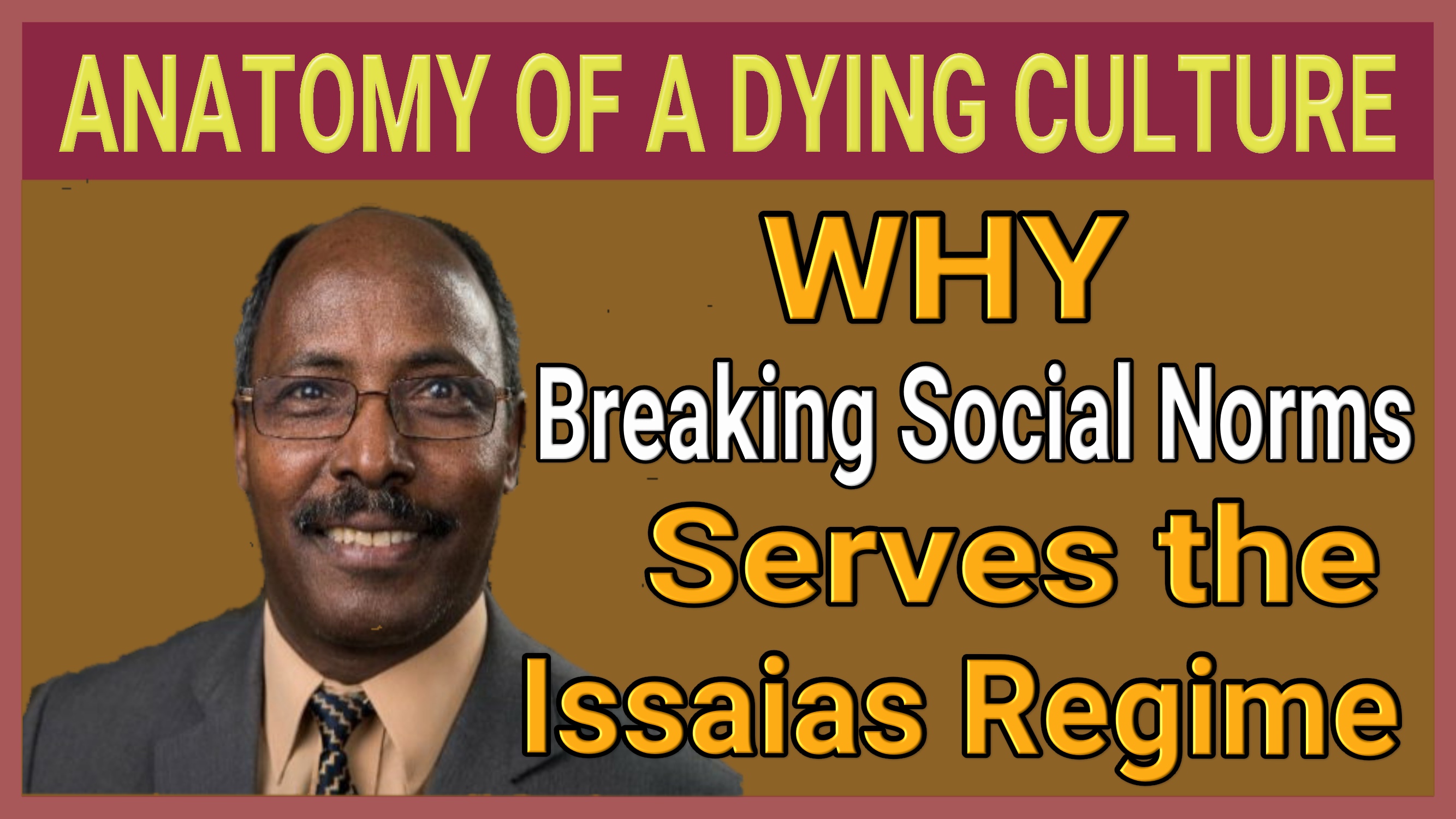
ANATOMY OF A DYING CULTURE: Why Breaking Social Norms Serves the Issaias Regime.1
Dr. Gebre Gebremariam
“A dying culture invariably exhibits rudeness, bad manners, and lack of consideration for others in minor matters. A loss of politeness, of gentle manners, is more significant than is a riot.”
– Robert A. Heinlein
The Eritrean diaspora is currently navigating a period of profound turbulence - a struggle that is as much about the sociology of power as it is about identity and manners. For decades, this community was held together by what Daron Acemoglu and James A. Robinson term a “Cage of Norms”2 - a rigid set of social customs that dictate behavior and suppress conflict in the absence of strong, democratic institutions (Acemoglu and Robinson 2019). In our context, this cage was constructed from the traditional pillars of Akbrot N’Abeiti (ኣኽብሮት ንዓበይቲ) (respect for elders) and Hidhidawi Mikibbar (ሕድሕዳዊ ምክብባር) (mutual respect).3
However, the unified silence regarding the internal politics of the homeland, often attributed to these norms, has been a dangerous misinterpretation. We must now dissect how a criminal regime distorted these values, how the youth have unwittingly played into the regime's hands by destroying them, and why the only path forward is to reclaim them.
Fear vs. Tradition: The Distortion of the Cage
For too long, the community’s silence in the face of tyranny has been mischaracterized as adherence to the “Cage of Norms.” In reality, this silence is a betrayal of those norms, driven not by tradition but by a paralyzing “fear of speaking truth to power.”
In the authentic Eritrean context, the “Cage of Norms” dictates exactly the opposite of submission. Traditional Eritrean values posit that people are expected to tell the truth; lying is culturally forbidden, and speaking truth to power is a moral obligation. To remain silent when injustice is committed against anyone is considered a profound disrespect and a violation of the social contract. Therefore, the silence of the past decades was not a result of the community sticking to the “Cage of Norms,” but rather a result of the regime forcing the community to violate its own values through systematic intimidation.
The Despotic Leviathan4 and the Criminal Regime
To understand why the cage is shattering today, we must look beyond generic theories of authoritarianism and examine the specific systemic rot originating in the homeland. While Acemoglu and Robinson (2019) describe the “Despotic Leviathan” as a state that silences dissent through fear, my own research suggests the Eritrean reality is far more insidious.
As detailed in “The Vicious Cycle of Criminality,” the deterioration of Eritrean societal norms is the direct downstream effect of a government that has evolved into a criminal enterprise (Gebremariam 2025). The ruling regime has institutionalized “corruption, nepotism, bureaucratic malpractice, and criminal syndicates” as tools of governance. This criminality fundamentally alters the relationship between the state and society. A standard Despotic Leviathan might at least provide order; a criminal one thrives on chaos and illicit extraction.
I argue that the regime’s involvement in human trafficking, contraband trade, and extortion has eroded the moral authority of the state. Consequently, the “Cage of Norms” that once preserved dignity was repurposed by the regime to enforce silence and complicity. The diaspora is forced to confront the reality that the very “Eritreanness” (ኤርትራውነት) the state claims to represent has been infected by this criminality, forcing citizens into a survival mode where ethical considerations are often discarded.
This moral erosion is not merely the result of tyranny but the calculated function of a "predatory mole" – an agent deeply embedded within the liberation struggle whose primary objective has been the systematic "hollowing out" of the state from within. By treating the Eritrean population as "captive prey" rather than citizens, the regime has engineered a sociopolitical environment where the "extraction of resources" – both human and material – takes precedence over nation-building. This internal predation effectively neutralizes the state’s institutions, ensuring they are too weak to resist the regime’s ultimate goal: the "preemptive surrender" of the nation’s hard-won independence to external interests (Gebremariam 2019).
Furthermore, the mass exodus of the youth must be understood not as a policy failure, but as a deliberate campaign of "demographic engineering" designed to "empty the land" of its most vital defenders. Faced with a regime that operates with the rapacity of a predator, the citizenry is left with "physical flight" as their only viable "anti-predatory strategy." The consequence is the deliberate disintegration of the "Eritrean Nuclear Family" – the bedrock of the nation’s social fabric – thereby fracturing the collective identity required to mount any unified resistance against the state's dissolution (Gebremariam 2019).
Ultimately, this trajectory reveals that the "rapprochement" with Ethiopia in 2018, for instance, was never about peace, but rather the formalization of "sovereign regression" into a state of "suzerainty." By unilaterally submitting to the geopolitical dominance of a neighbor without securing borders or institutionalizing relations, the leadership has effectively reduced Eritrea to a "vassal state." In this context, the "Eritreanness" that the diaspora clings to is being actively traded away by a leadership that views the country’s sovereignty not as a sacred trust, but as a bargaining chip in a regional power play intended to secure the regime’s survival at the expense of the nation’s existence (Gebremariam 2019).
Reclaiming the Cage: The Red Queen Effect5
The current crisis reveals a tragic reality: the regime successfully manipulated the youth into acting against their own long - term interests and the interests of the country. By encouraging the destruction of the “Cage of Norms” - the traditional value system that once held Eritrean society together - the state effectively recruited the younger generation to dismantle their own societal defenses. The youth, unbeknownst to them, became victims of a strategy designed to atomize society, doing exactly what the regime wanted them to do.
Consequently, the “rudeness,” vulgarity, and lack of politeness seen in the digital realm should not be viewed as a revolutionary dismantling of hierarchy, but as a dangerous symptom of the regime’s success. The insults and doxxing on platforms like TikTok and Facebook represent a generation unwittingly executing the regime's blueprint for social erosion. By abandoning the “Cage of Norms,” the youth discarded the very tools needed to resist tyranny, effectively engaging in self - sabotage and deepening the “vicious cycle of criminality” (Gebremariam 2025).
The “Red Queen” effect (Acemoglu and Robinson 2019) must therefore be interpreted as the urgent need to stop this drift and “run fast” to recover what was lost. For decades, society failed to keep up with the state’s efforts to erode its values, resulting in the current stagnation. The rise of political movements such as the Organization of Eritrean Unity (OEU) and its likes must signal a pivot: a realization that “running fast” means racing towards the “Cage of Norms,” not away from it. To assert true rights and check the state’s power, the youth must rebuild the structural integrity and civility that the regime tricked them into destroying.
Fear, Fragmentation, and the Dying Culture
Today, the “Cage of Norms” is shattering completely, but not in a way that liberates us. Instead, we are witnessing the triumph of a regime strategy designed to replace our moral foundations with chaos. As Robert A. Heinlein presciently observed, the true signal of a “dying culture” is not the riot itself, but the preceding collapse of polite society (Heinlein 1982). The descent into “rudeness, bad manners, and lack of consideration” currently plaguing the Eritrean cyberspace is a symptom of a society that has mistaken the “Cage of Norms” for the enemy, when in reality, the true enemy is the “Cage of Fear.”
This behavior indicates that the youth are inadvertently working against the country's salvation. By indulging in the destruction of social norms, they are dismantling the very moral foundations required to build a functioning democracy. The regime has long sought to break the “Cage of Norms” precisely because a society without shared values is easier to dominate. Therefore, the “dying culture” - characterized by vulgarity and fragmentation - works entirely in favor of the regime. The “Red Queen” effect is currently not functioning as a mechanism of liberation, but as a chaotic race to the bottom. To survive, the movement must realize that restoring civility and speaking truth to power is an act of resistance, while the current “rudeness” is merely a manifestation of the regime’s success in atomizing society.
The Danger of the Absent Leviathan
The tragedy is that breaking the “Cage of Norms” does not lead to liberty; it leads to vulnerability. Acemoglu and Robinson (2019) warn that liberty is found only in the “Narrow Corridor” - a delicate balance where the state is strong enough to enforce laws, but society is strong enough to shackle the state.
Currently, by abandoning traditional norms, the Eritrean diaspora is careening out of the cage but missing the corridor entirely. We are drifting toward the “Absent Leviathan” - a state of disorder and anarchy that the regime exploits to justify its heavy hand. The physical clashes at festivals in Giessen, Stockholm, and Edmonton are not organized political movements entering the corridor; they are the chaotic fallout of a collapsed normative structure (Plaut 2024). The “loss of gentle manners” is significant because it indicates the removal of the only restraint the community had against the state's divisiveness. Without the “Cage of Norms” to regulate behavior, and without a legitimate, democratic state to arbitrate disputes, the diaspora is left with raw power struggles. The “bad manners” of cyberspace translate into the stones and sticks of the street because the “Cage of Fear” has successfully displaced the traditional mechanisms of conflict resolution.
Conclusion: The Struggle to Remain Relevant
The title “Anatomy of a Dying Culture: Why Breaking Social Norms Serves the Issaias Regime” is existentially accurate. It reveals that the erosion of the “Cage of Norms” is not accidental, but a strategic imperative for a “predatory mole” intent on the “emptying of the land” and the dismantling of the “Eritrean Nuclear Family” (Gebremariam 2019). Heinlein’s observation serves as a grim warning: the loss of manners is the precursor to the collapse of a civilization. Yet, the Eritrean diaspora has lost its “gentle manners” not simply because the norms were corrupt, but because the regime requires social fragmentation to implement its agenda of “sovereign regression” and “suzerainty” without resistance (Gebremariam 2019).
As we wrestle with the “vicious cycle of criminality” I have outlined, we must find a way to enter the “Narrow Corridor.” We must forge a new identity that rejects the silence imposed by fear while embracing a reclaimed “Cage of Norms” that demands truth-telling and mutual respect. We must speak truth to power not by destroying our culture, but by recognizing that the regime breaks our social norms specifically to disable our capacity to defend the nation. If we fail, the “rudeness” of the present will not be a transition, but a final destination engineered by a leadership that has murdered the culture to survive.
Footnotes
- 1. https://eritreahagerey.com/wp-content/uploads/2019/02/The-Erosion-and-Surrender-of-Eritrean-Sovereignty-2.pdf
- 2. The "Cage of Norms" is a concept introduced by Acemoglu and Robinson (2019) to describe the rigid set of social customs, rituals, and traditions that regulate human behavior in societies lacking a strong centralized state (the "Absent Leviathan"). While these norms function to suppress violence and maintain social order, they simultaneously restrict individual liberty and stifle social change by demanding strict conformity to collective expectations.
- 3. You can read the following six-part document, in Tigrigna, on the development of the “Cage of Norms” in Eritrea –
Part I, Part II, Part III, Part IV, Part V, and Part VI - 4. Borrowing from Thomas Hobbes, Acemoglu and Robinson (2019) use the term "Leviathan" to represent the state’s centralized power and capacity to enforce laws, resolve conflicts, and maintain order. They argue that liberty emerges only when this Leviathan is "shackled" - meaning the state is strong enough to govern effectively, yet constrained by an equally powerful and vigilant society to prevent it from becoming a "Despotic Leviathan" (tyranny) or collapsing into an "Absent Leviathan" (anarchy).
- 5. The "Red Queen Effect" is a metaphor used by Acemoglu and Robinson (2019), adapted from Lewis Carroll’s Through the Looking-Glass, to describe the continuous, dynamic struggle between state and society. It posits that to maintain liberty within the "Narrow Corridor," society must "run fast" - constantly evolving its capacity to organize and assert rights - just to keep pace with the state’s efforts to expand its power and control. If society stops running, the state becomes despotic; if the state stops running, it collapses into anarchy.
-----------
References
- Acemoglu, Daron, and James A. Robinson. 2019. The Narrow Corridor: States, Societies, and the Fate of Liberty. New York: Penguin Press.
- Bernal, Victoria. 2014. Nation as Network: Diaspora, Cyberspace, and Citizenship. Chicago: University of Chicago Press.
- Gebremariam, Gebre. 2025. “The Vicious Cycle of Criminality: How Corruption, Nepotism, Bureaucratic Malpractice, and Criminal Syndicates Have Been Undermining Eritrean National Identity.” EritreaHagerey.
- Gebremariam, Gebre. 2019. “The Erosion and Surrender of Eritrean Sovereignty: The Work of a Well-Implanted Predatory Mole in the Eritrean Liberation Struggle.” EritreaHagerey.
- Gebremariam, Gebre. 2018. “ምምሓው ኤርትራዊት ያታዊ ኣሃዳዊት (ተርሞኑክሌሳዊ) ቤተ-ሰብ፡ ቅጽበታውን ነባሪን ሓደጋ ንቐጻልነት ኤርትራ ከም ሃገርን ከም ሕብረተ-ሰብን.” EritreaHagerey.
Part I, Part II, Part III, Part IV, Part V, and Part VI - Heinlein, Robert A. 1982. Friday. New York: Holt, Rinehart and Winston.
- Plaut, Martin. 2024. “Eritrea’s strife goes global as diasporas, including those in Canada, clash at cultural festivals.” The Globe and Mail, January 19, 2024.
See also more articles from Dr Gebre Gebremariam:
- ምስ ዶ/ር ገብረመስቀል ገብረማሪያም ዝተገብረ ዕላላትን፡ ዝተዋህበ ኣስተምህሮኣዊ ሰሚናራትን ኣብ ዝተፈላለዩ እዋናት።
- ዩቱብ ቻነል ዶር ገብረ ገብረማሪያም Dr Gebre Gebremariam Youtube channel
- ወብሳይት ዶር ገብረ ገብረማሪያም Dr Gebre Gebremariam Website
 ብተወሳኺ፡ ነቲ ኣብ ዩቱብ ቻነል ዝወጽእ ሓበሬታ፡ ንመትከላት ማሕበራዊ መትከላት ዩቱብ (YouTube Community Guidelines)፡ እናኽበረ የውጽእ። ስኒትና፡ ብዝከኣሎ መጠን፡ ነዚ መትከላት'ዚን ናይ ሃገርና ኤርትራን ህዝባን ክዉንነትን ምርኩስ ገይሩ፡ ኣብ መርበብ ሓበሬታኡ ስኒትና (www.snitna.com) ክውጽእ ዝግብኦ ሓበሬታ እናመመየ ከውጽእ ይህቅንን ይጽዕርን። እዚ ስራሕዚ ምሉእ ዓወት ንክህልዎ ድማ ብዓቢኡ፡ ግቡእ ኣጠቓቕማ ተሳተፍቲን ምትሕብባርን ምስዝህሉ ኢዩ። ስለዚ፡ ነዚ መትከላት ዚ ንምኽባር ንኹሉ ተገልጋላይ'ዚ መርበብዚ ንጽውዕ። ዝኾነ ሃሳዪ ተርእዮታት ምስዘጋጥሙ፡ ቅሬታኹም ወይ ርእይቶኹም ብኢመይል ኣድራሻና ኣቢልኩም ክትልእኩልና ንላቦ።
 See also Related / ምስዚ ዝተኣሳሰር ሓበሬታ፡-
- Snitna YouTube - ስኒትና ዩቱብ ቻነል።
- Snitna Network and Sinit Seminars Directory. ብ`ስኒትና ከምኡ`ውን ስኒት ዝተኻየዱ ሰሚናራት።
- Snitna FaceBook - ስኒትና ፌስቡክ።
- Sinit YouTube - ስኒት ዩቱብ ቻነል።
- ዘተ ንሓባራዊ ንቕሓት
Dialogue for Common Awareness
مجموعة الحوار للوعي المشترك - ሌላ ምስ
ፖለቲካዊ ሰልፍታትን ህዝባዊ ምንቅስቓሳትን ኤርትራ፡
Eritrean Political parties and Civic movements.s
مقدمة في الأحزاب السياسية والحركات المدنية الإريترية - BUILDING DEMOCRACY IN ERITREA - ህንጸት ዲሞክራሲ ኣብ ኤርትራ بناء الديمقراطية في إريتريا
- ሕግን ሕብረተሰብን - Law and Society.
- ኣስተምህሮ፡ መስርሕ ምንዳፍ ቅዋም ኤርትራ - The Eritrean Constitution Making Process
Seminar by Dr Bereket Habte selassie. ኣስተምህሮ፡ ብ`ዶር. በረኸት ሃብተስላሰ። - ሲምፖዝዩም ኤርትራ (Eri-Platform: 2018 - 2020)
- ዋዕላ ህንጸት ዲሞክራሲ ኣብ ኤርትራ Building Democracy in Eritrea Conference (Eritrea Focus: 2019 - 2020)
- Enough is enough! ይኣክል ምልኪ! ማዕበል ድምጺ ህዝቢ لقد طفح الكيل
- 1993, Eritrean independence referendum Results
ታሪኻዊ ውጽኢት ረፈረንዱም ኤርትራ 1993. - ሃገራዊ ቻርተር ኤርትራ - ኣብ 3ይ ጉባኤ ህ.ግ.ሓ.ኤ: ዝጸደቐ (ናቕፋ 10 - 16 ለካቲት 1994)።
- PFDJ NATIONAL CHARTER Adopted by the 3rd Congress of the EPLF/PFDJ Naqfa, February 10-16, 1994.
- ንዝኽሪ ግዳያት ዲክታቶሪያዊ ምሕደራ ኤርትራ። In memory of Victims of Dictatorial Administration in Eritrea.
- G-15:- ቅልዕቲ ወረቐት ናብ ህዝቢ ኤርትራ፡ ኣገደስቲ እዋናውያን ጉዳያት፡ (ኣስመራ፡ ነሓሰ 3፡ 2001)
- G-15:-Open Letter To The People of Eritrea (Asmara, August 3, 2001)
- G-15:-ቅሉዕ መልእኽቲ ናብ ኩሎም ኣባላት ህግደፍ
- G-15:-Open Letter to All PFDJ Members (Audio) ቅሉዕ መልእኽቲ ናብ ኩሎም ኣባላት ህግደፍ (ብድምጺ)
- G-15:-Open Letter to All PFDJ Members
- GI: ህጹጽ ጻውዒት ንኹሎም ኣብ መላእ ኵርናዓት ዓለም ዝርከቡ ኤርትራውያን። An Urgent Call to All Eritreans Worldwide. المبادرة العالمية لتمكين الحركة الشعبية الاريترية
- ድምጽና (Our Voice)
- መደብ ንጋባእ ENGAGE ERITREA!
- Advice for All Eritreans ምኽሪ ንኹሎም ኤርትራውያን
- UN Human Rights Council - Human Rights in Eritrea (Website) / ናይ ውሕሃ ቤትምኽሪ ሰብኣዊ መሰላት - ኩነታት ሰብኣዊ መሰላት ኣብ ኤርትራ፡ (Website)
- UN Human Rights Council - Human Rights in Eritrea (YouTube) / ናይ ውሕሃ ቤትምኽሪ ሰብኣዊ መሰላት - ኩነታት ሰብኣዊ መሰላት ኣብ ኤርትራ፡ (YouTube)
- Human Rights in Eritrea / ኩነታት ሰብኣዊ መሰላት ኣብ ኤርትራ፡
- UN - Commission of inquiry on Eritrea / ናይ ውሕሃ መርማሪት ኮሚሽን ሰብኣዊ መሰላት ኤርትራ፡
- Mike Smith / ሚስተር ማይክ ስሚዝ፡ ኣቦ ወንበር መርማሪት ኮሚሽን ሰብኣዊ መሰላት ኤርትራ፡
- Also see: "UN - COI on Eritrea / ናይ ውሕሃ መርማሪት ኮሚሽን ሰብኣዊ መሰላት ኤርትራ፡
- UN COMMISSION OF INQUIRY ERITREA (COI-ERITREA) And POPULAR RESPONSES
- ጸብጻብ መርማሪት ኮሚሽን ሰብኣዊ መሰላት ኤርትራ፡ ህዝባዊ ግብረ-መልሲን
- ጸብጻብ መርማሪት ኮምሽን ኵነታት ሰብኣዊ መሰላት ኣብ ኤርትራ – ዘይወግዓዊ ትርጉም (ብትግርኛ)